



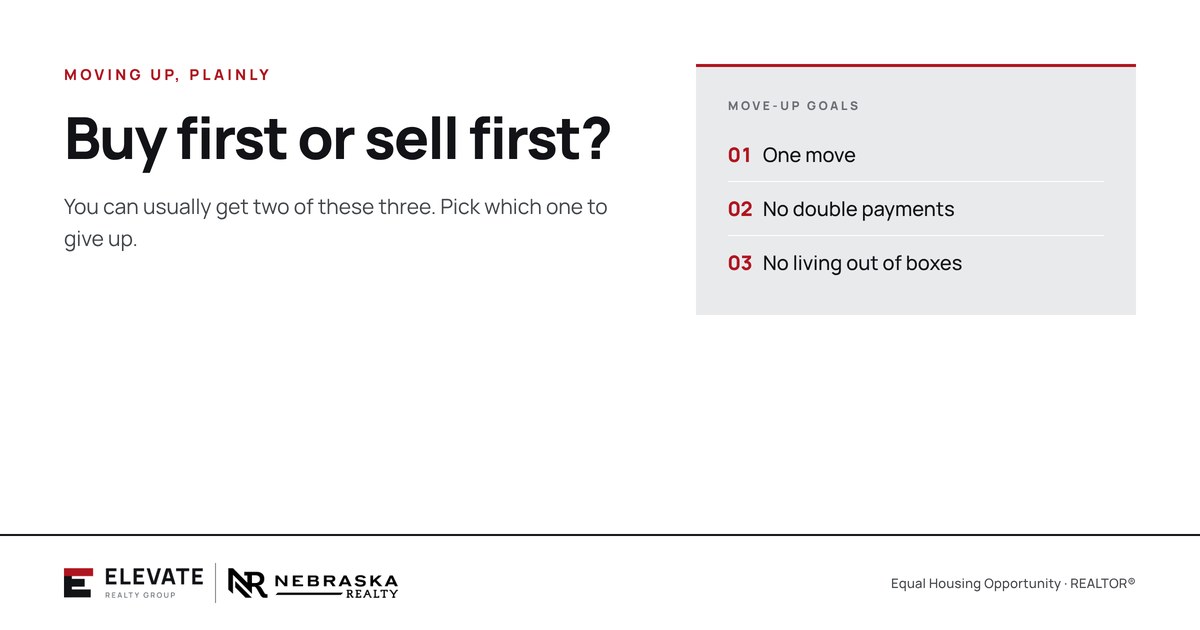
Should we buy our next home first or sell our current one first?
Selling first gives you a firm budget and no chance of carrying two house payments, but you may need a short-term place to live. Buying first means one move, but you need to qualify for both payments or use a home sale contingency or bridge loan. The right order depends on your equity, your savings and how fast homes are selling at your price.
Buy first or sell first: you can usually get two of one move, no double payments and no living out of boxes.
By Jorin Masley | November 8, 2026
Most move-up buyers I talk with want the same thing: one clean move, no double payments and no living out of boxes. You can usually get two of those three. The question is which one you’re willing to give up.
Option 1: Sell first
What you get: You know exactly how much money you have for the next home. Your offer looks strong to sellers because it doesn’t depend on another sale. You never carry two mortgages.
What it costs: You may need to move twice, or rent for a few weeks or months. If the market moves while you’re looking, you’re shopping without a home of your own.
A middle ground: Ask the buyer of your home to let you stay for a short time after closing, often called a rent-back. It gives you a few extra weeks to close on the next house.
Option 2: Buy first
What you get: One move. You can take your time choosing the next home and move in before you list the old one, which also makes it easier to show.
What it costs: Unless you can qualify for both payments, you’ll need help to cover the down payment before the first home sells. And until it sells, you’re paying for two houses.
The common tools here:
- A home sale contingency. Your offer depends on your current home selling. It protects you, but sellers often see it as weaker, so it works best when your home is already listed or under contract.
- A bridge loan. A short-term loan against the home you own that covers the next down payment. It costs more than a regular mortgage and works best when you have solid equity.
- A home equity line of credit opened before you list. Some buyers use it for the down payment, then pay it off when the old home sells. Many lenders won’t open one once your home is listed, so timing matters.
How to decide
- Know your net. What will you walk away with after paying off your loan and selling costs? That number drives everything.
- Ask your lender what you qualify for with both payments counted, and for how many months you could carry them.
- Pick your risk. A short-term move is a hassle. Two payments for longer than you planned is a financial risk. Most families choose the hassle.
- Match the tool to the plan. Sell first with a rent-back, buy with a sale contingency or buy with a bridge loan.
If you’re also comparing towns for the next home, check the tax side early. Average rates differ a lot between Lancaster, Saline and Seward counties, and that changes the real monthly payment on the next house.
Frequently asked questions
Is it better to buy or sell first?
Selling first is lower risk because you know your budget and never carry two payments. Buying first is more convenient because you move once. Most move-up buyers with limited savings sell first and arrange a short stay after closing.
Can I make an offer contingent on selling my house?
Yes. A home sale contingency makes your purchase depend on your current home selling. Sellers often prefer offers without one, so it works best when your home is already listed or under contract.
What is a bridge loan?
A bridge loan is a short-term loan against the home you already own that helps pay the down payment on the next one. It usually costs more than a regular mortgage and is paid off when your first home sells.
What happens if my house doesn’t sell in time?
You may carry two house payments until it sells. Options include lowering the price, renting it out if the numbers work or relying on a sale contingency if you used one. Plan for this before you buy.
The order matters less than the plan
There’s no single right answer, only the one that fits your equity, savings and timeline. If you’re thinking about moving up, I’m happy to run your net and both scenarios side by side. Reach out anytime at 402-728-8750 or [email protected].
About Jorin Masley
REALTOR® and Team Lead at Elevate Realty Group, brokered by Nebraska Realty. Leads with clarity: makes the complicated plain and shows you the real numbers early. Serves Lincoln and the surrounding communities of Milford, Seward, Beatrice, Crete, Waverly, Hickman and Roca.