



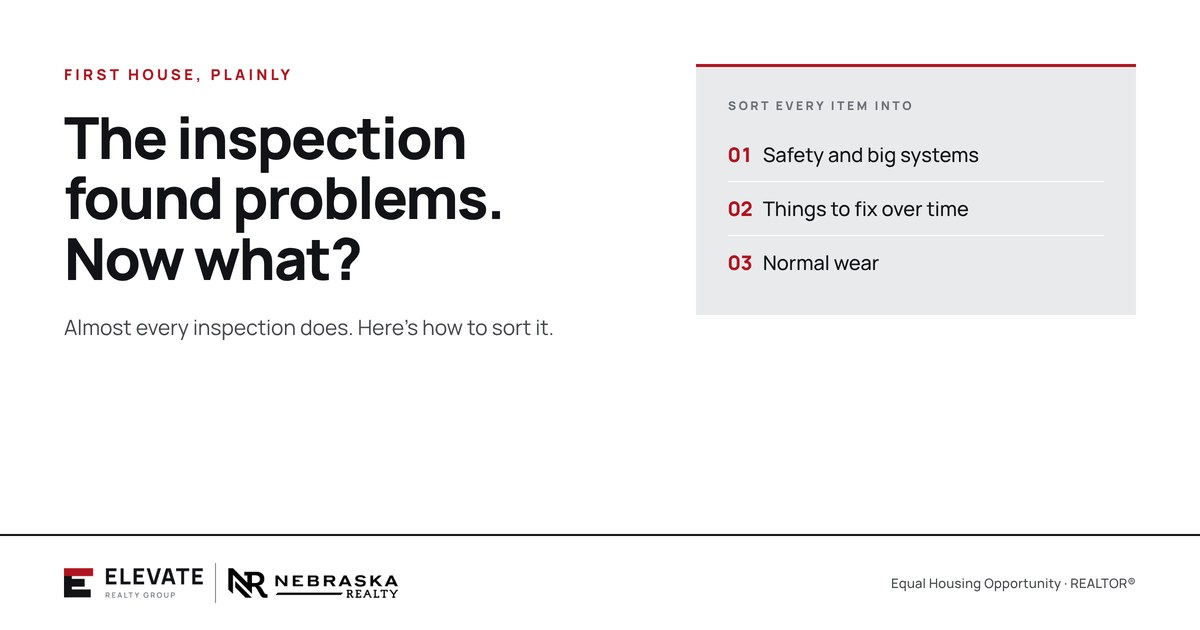
What happens if the home inspection finds problems?
Almost every home inspection finds problems, even on newer homes, so a long report is normal. Sort what the inspector found into three groups: safety and big systems, things you can fix over time and normal wear. Then you can ask the seller to repair, ask for a credit or lower price, accept the home as it is or cancel within your inspection period.
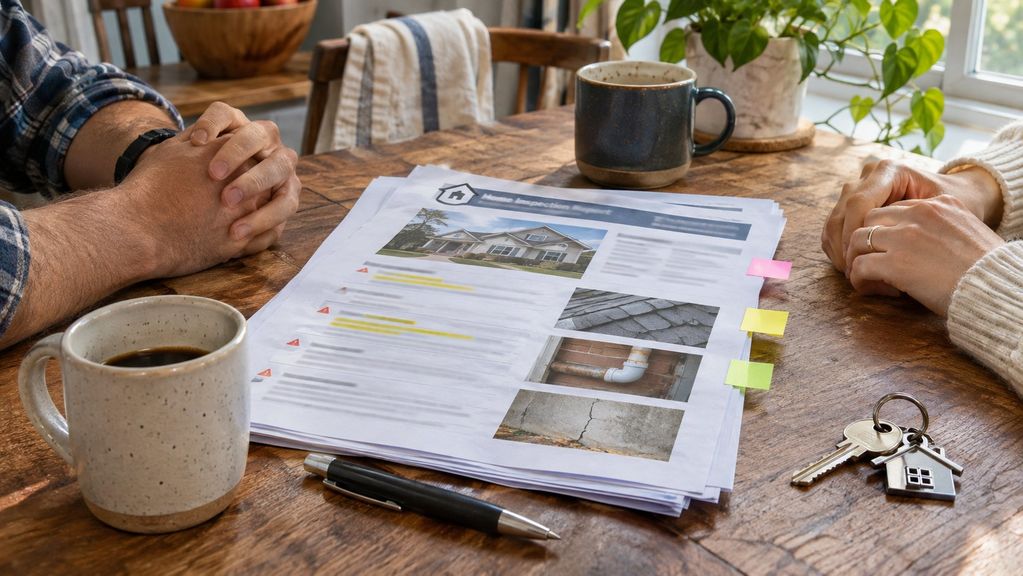
A long report doesn’t mean a bad house. Sort it first: safety and big systems, things to fix over time, normal wear.
By Cassi Ohlin | November 6, 2026
The inspection is the day a lot of first-time buyers stop sleeping well. You loved the house on Saturday. On Tuesday you’re reading a 50-page report with red flags and photos of things you never noticed.
Take a breath. A long report doesn’t mean a bad house. Inspectors write down everything they see, from a loose outlet cover to a cracked foundation, and they don’t sort it by how much it matters. That part is our job, and yours.
Sort the report into three groups
Here’s how I walk every buyer through it, usually at a kitchen table with the report open.
1. Safety and big systems. These are the items that can hurt someone or cost real money: the roof, the foundation, electrical hazards, the furnace or air conditioner, plumbing leaks, water in the basement, a gas smell or a high radon result. These are what you negotiate.
2. Things to fix over time. Older windows, a water heater near the end of its life, worn caulk, a sticky door. Real items, but not emergencies. Write them down for your first-year budget.
3. Normal wear. Scuffs, small cracks in drywall, a dripping faucet, a missing outlet cover. Every lived-in house has these. Asking a seller to fix them usually costs you goodwill and gets you very little.
Most reports end up with a short list in group one. That’s the list that matters.
Your four options
Once you know what’s in group one, you have four choices.
- Ask the seller to repair it. Best when the work needs a licensed contractor and you want it done before you own the home, like an electrical hazard or a gas leak. Ask for receipts.
- Ask for a credit or a lower price. Best when you’d rather pick the contractor yourself. Your lender limits how much a seller can credit you, so check with them before you ask.
- Accept the home as it is. Sometimes the price already reflects the condition, or the items are small enough to handle yourself.
- Cancel. If the problems are bigger than your budget or your comfort, you can walk away within your inspection period. Follow the contract’s steps and deadlines so your earnest money stays protected.
If an item needs a closer look, like a crack in the foundation or an old sewer line, get a specialist out before your deadline. A structural engineer, roofer or plumber can tell you what the inspector can only flag. In Lancaster County, homes with a private well or septic system also need a separate inspection before they can be sold, done by an inspector permitted by the Lincoln-Lancaster County Health Department.
Watch the clock
Your purchase agreement sets a deadline for inspections and repair requests. Miss it and you may lose the right to negotiate or cancel. Put the date on your calendar the day you go under contract, and schedule the inspection in the first few days.
It also helps to know what the house will cost to insure before that deadline passes. An older roof can change your premium, which changes your real monthly payment.
How to ask without blowing up the deal
Keep the request short and tied to the report. Three serious items with page numbers lands better than thirty small ones. Sellers tend to say yes to clear safety and system issues and push back on cosmetic lists.
Expect a counter. The seller might fix some items, offer a credit for others and decline the rest. That’s normal. The goal isn’t to win every line. It’s to buy a house you can live in and afford to keep up.
And if the answer still doesn’t sit right, that’s worth listening to. How does that feel to you? We’ll talk through what to avoid while you’re under contract and whether this is still the right house.
Frequently asked questions
Is it normal for a home inspection to find a lot of problems?
Yes. Inspectors list everything they see, from small wear to major issues, so a long report is normal even on newer homes. What matters is how many items involve safety, structure or major systems.
What should I ask the seller to fix after an inspection?
Focus on safety hazards and big systems: roof, foundation, electrical, heating and cooling, plumbing leaks and water problems. Skip cosmetic items and normal wear, which rarely get fixed and can weaken your request.
Can I back out after a bad home inspection?
Usually, yes, if you cancel within the inspection period in your contract and follow its steps. Missing the deadline or backing out for a reason the contract doesn’t cover can put your earnest money at risk.
Should I ask for repairs or a credit?
Ask for repairs when the work needs a licensed pro and you want it done before closing. Ask for a credit or lower price when you’d rather choose the contractor yourself. Check your lender’s limit on seller credits first.
You don’t have to sort it alone
An inspection report is information, not a verdict. Sort it, focus on what matters and make your decision before the deadline. If you’re staring at a report right now and not sure what’s serious, send it over. I’m happy to walk through it with you. Reach out anytime at 402-728-8750 or [email protected].
About Cassi Ohlin
REALTOR® and Team Lead at Elevate Realty Group, brokered by Nebraska Realty. Leads with warmth: makes you feel like the only person in the room. Milford-based, serves the same Lincoln-area communities.