



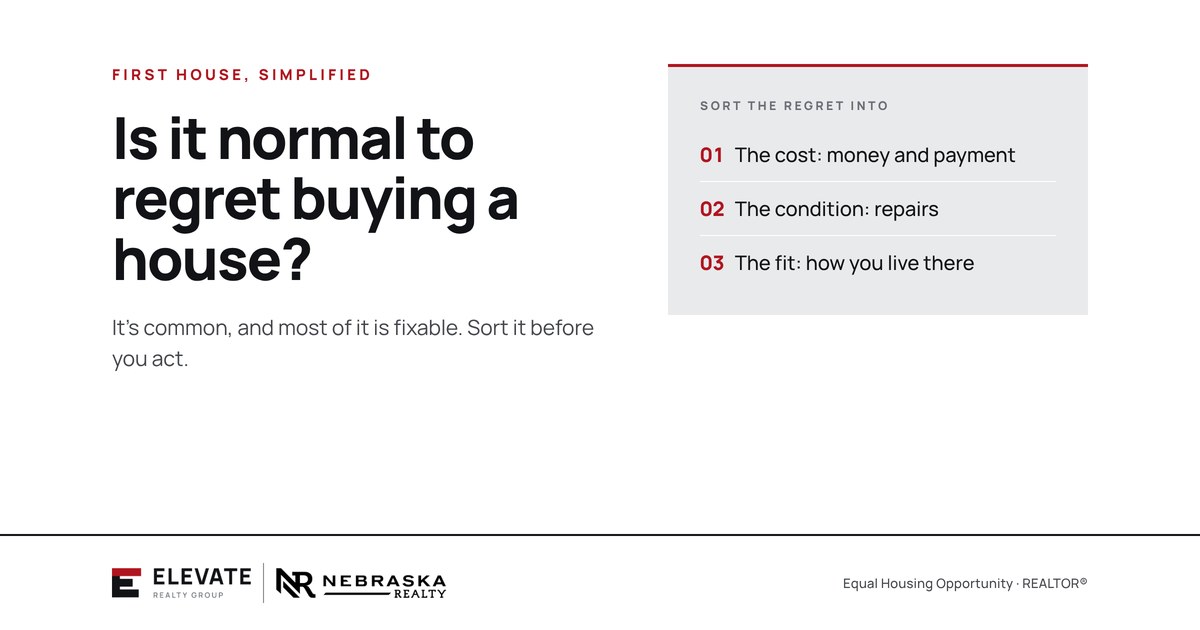
Is it normal to regret buying a house?
Yes. In a June 2025 NerdWallet survey conducted by The Harris Poll, 22% of homeowners said they regret buying their current home and 8% said they strongly regret it. Most regret in the first months comes from money, surprise repairs or the stress of the move, and much of it is fixable. Before you make a big decision, sort the feeling into one of three buckets: the cost, the condition or the fit. Then decide with numbers in front of you.
By Cassi Ohlin | November 23, 2026
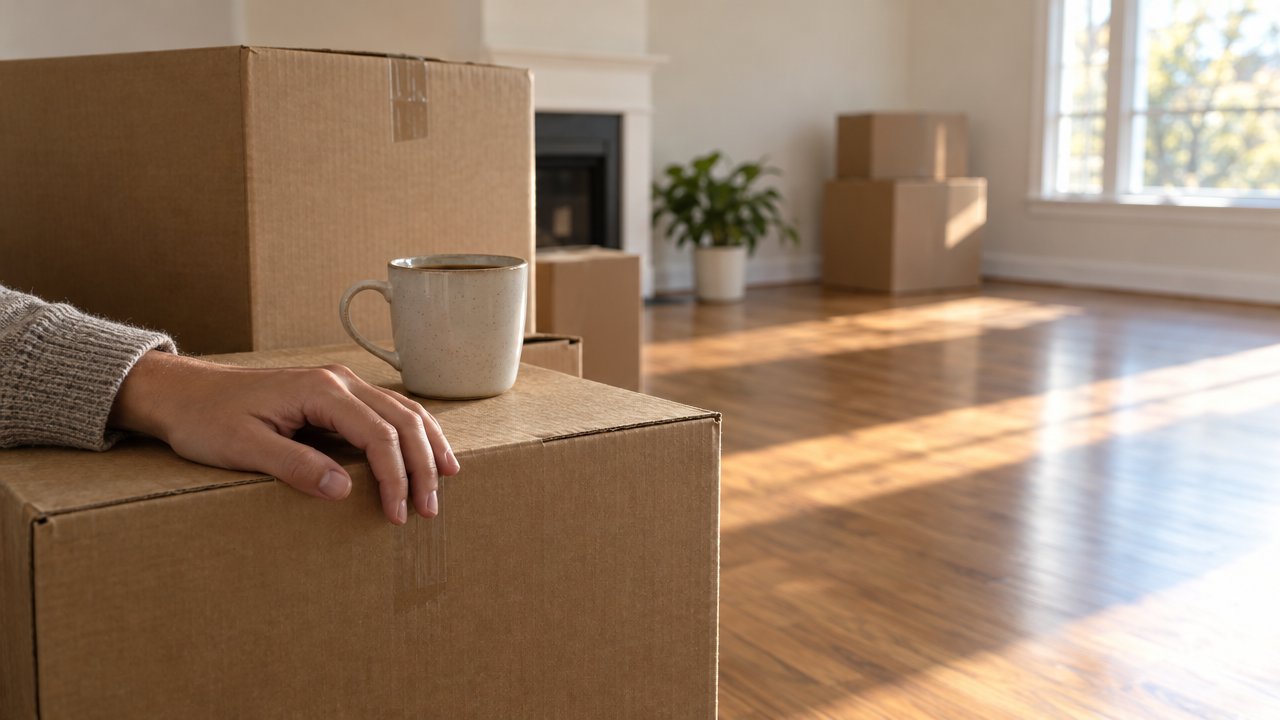
You did everything right. You got preapproved, toured the homes, made the offer and signed the stack of papers. Now you’re standing in a house full of boxes, wondering what you just did.
That feeling has a name: buyer’s remorse. It’s common, it’s usually loudest in the first few weeks and it doesn’t mean you made a mistake. It does mean something deserves a closer look. Here’s how I walk clients through it.
Prefer to watch? Here’s the 47-second version.
https://www.youtube.com/watch?v=kzyvaJ-9m4A
Why regret shows up after closing
Buying a home stacks a lot of big feelings into a short window. Once the keys are in your hand, the excitement drops and the details move in. These are the triggers I hear about most:
- The payment is real now. A number on a Loan Estimate feels different when it leaves your checking account every month.
- Your savings are lower. Down payment, closing costs and moving costs can drain the cushion that used to give you breathing room.
- Something breaks. A water heater, a garage door opener, a leaky faucet. Small repairs feel bigger when the house is new to you.
- You notice things you missed. Street noise at rush hour, a dark kitchen in winter, a longer drive than you expected.
- You compare. The house you passed on starts to look better in your memory than it ever did in person.
- The move itself. Packing, unpacking and living in disorder wear anyone down.
A lot of this fades once the boxes are gone and the house has a routine. If it doesn’t, that’s your signal to look closer.
Sort the feeling before you act
“I regret this” is too big to act on. Break it into something you can measure. Grab a notebook and write down what’s bothering you, then put each item in one of three buckets.
1. The cost
If the regret is mostly about money, start with the real numbers. Write down your full monthly payment, including taxes and insurance, and every other bill. If the house is stretching you, our guide to how much house you can afford without being house poor walks through how to rebuild the budget around it.
Watch for a payment change in the first year or two, too. Taxes and insurance can rise even on a fixed-rate loan, and the reasons are covered in why your mortgage payment went up.
If you worry you paid too much, check it instead of guessing. Our post on how to know you didn’t overpay for your home shows what to compare.
2. The condition
If something keeps breaking or you found a bigger problem, get a real estimate before you decide how bad it is. Pull out your inspection report and see whether the issue was noted. For example, a $400 repair and a $14,000 repair are very different kinds of regret.
Budget for upkeep going forward. Every house needs it, and having a small repair fund turns a surprise into a line item.
3. The fit
Fit is the hardest bucket. The layout doesn’t work, the commute is longer than you hoped or the house just doesn’t feel like yours. Give it time before you judge it. Paint, furniture, lighting and a few months of living there change how a home feels more than most people expect.
If, after a real stretch of time, the house still doesn’t work for how you live, that’s a fair reason to start planning a change. Planning is different from panicking.
What you can and can’t undo
This is where people get tripped up. Once you’ve closed, there’s no cooling-off period that lets you hand the house back.
You may have heard about a three-day “right of rescission” on mortgages. According to the Consumer Financial Protection Bureau (CFPB), that right does not apply when the loan is used to purchase or build your principal home. It’s meant for some other loans secured by your home, like certain refinances and second mortgages, not for the purchase loan.
So your options after closing are about what you do next, not undoing what happened:
- Fix what’s fixable. Repairs, updates and a budget reset solve most early regret.
- Get help early if the payment is the problem. Call your loan servicer before you miss a payment. You can also talk with a housing counselor approved by the U.S. Department of Housing and Urban Development (HUD). The CFPB’s housing counselor search lists approved agencies by ZIP code, and they can offer independent advice, often at little or no cost.
- Plan a sale if the house truly doesn’t work. Selling soon after buying means paying selling costs on top of the buying costs you already paid, with little time for the home to gain value. It can still be the right call. Just run the numbers first so you know what you’d walk away with.
If you’re weighing that last option, this is exactly where a quick conversation helps. We can look at what similar homes are selling for right now and what selling would cost, so you’re deciding with facts instead of a bad week.
How to lower the odds of regret next time
If you’re still shopping and reading this to avoid the feeling altogether, a few habits help:
- Budget for the real payment, not the approval. Your approval is a ceiling, not a target.
- Visit more than once. Go at different times of day and on different days of the week.
- Keep your inspection. It’s your best look at the house before you’re committed, and knowing when to walk away after the inspection is part of the plan.
- Leave a cushion. Keep some savings after closing so the first repair doesn’t feel like a crisis.
Frequently asked questions
How common is buyer’s remorse after buying a house?
It’s common. A June 2025 NerdWallet survey conducted by The Harris Poll found 22% of homeowners regret buying their current home and 8% strongly regret it. Many buyers feel some doubt in the first weeks even when the purchase turns out fine.
Can I back out of buying a house after closing?
Generally, no. The CFPB says the right of rescission does not apply to a loan used to purchase or build your principal home. After closing, your options are to fix what’s bothering you, get help with the payment or plan a sale.
How long does buyer’s remorse last?
There’s no set timeline. For many people it eases once they’re unpacked and the house has a routine. If the same concern is still there after a few months, sort it into cost, condition or fit and deal with that specific problem.
What should I do if I can’t afford my mortgage payment?
Call your loan servicer before you miss a payment and ask what options they offer. You can also find a HUD-approved housing counselor through the CFPB’s search tool. They can offer independent advice, often at little or no cost.
Should I sell if I regret buying my house?
Sometimes, but not on a bad day. Selling soon after buying means paying selling costs with little time for the home to gain value. Run the numbers on what you’d net before you list.
The bottom line
Regret after buying a house is normal, and most of it is about money, repairs or the move itself. Name the problem, sort it and fix what you can before you make any big decisions.
If you’re thinking through this for your own situation, I’m happy to walk you through it. Reach out to Elevate Realty Group anytime.
About Cassi Ohlin
Cassi Ohlin is a REALTOR® and Team Lead at Elevate Realty Group, brokered by Nebraska Realty. She leads with warmth: she makes you feel like the only person in the room. She’s based in Milford and serves Lincoln and the surrounding communities of Milford, Seward, Beatrice, Crete, Waverly, Hickman and Roca.